


The 5-Minute Window That Can Make or Break Your Practice
When a prospective patient fills out a form on your website, their interest is at its peak. They’ve done the research, they’ve clicked the button, and now they’re waiting, often unknowingly, for you to respond. The question is: How long are you waiting to call them back?
If your answer is longer than five minutes, you may already be too late.
The Data Is Clear: Every Minute Counts
A now-famous study from Harvard Business Review, titled “The Short Life of Online Sales Leads,” analyzed more than 1,000 U.S. companies and 100,000 contact attempts. The results were eye-opening:
- Companies that responded to inquiries within 1 hour were 7 times more likely to qualify than those that waited longer.
- A 60-fold drop occurred if the first contact was more than 24 hours later.
That study focused on what happens within the first hour. What about the first 5 minutes?
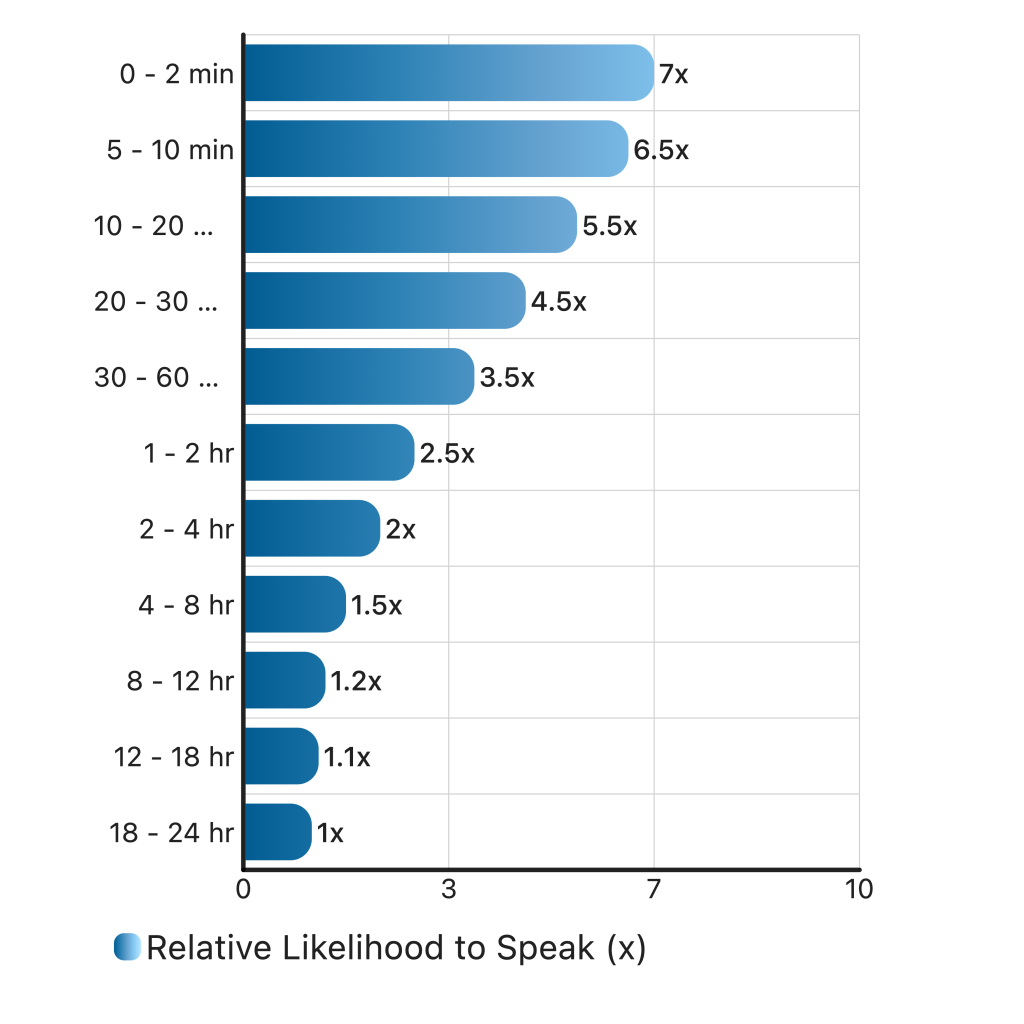
While Harvard’s study focused on the 60-minute mark, several follow-up studies by sales technology firms, such as Voiso and InsideSales.com, demonstrate that the sweet spot is actually within the first 5 minutes.
Here’s what happens during that brief window:
- The lead is still near their phone or computer.
- Their intent is high because they just finished searching.
- They’re often researching multiple practices, so the first one to reply earns the first conversation.
Responding within 2–5 minutes has been shown to increase contact and qualification rates by as much as 100x compared to waiting just 30 minutes.
What Happens After 5 Minutes?
- 5–10 minutes: Your chances of reaching the patient begin to drop sharply. The excitement fades, they move on, or they’re already talking to another provider.
- 10–30 minutes: You’re now in a race against competitors who may have already booked a consultation.
- After 1 hour: You’re 7 times less likely to qualify the lead compared to someone who called within the first hour (Harvard Business Review).
- After 24 hours, your odds have plummeted. The lead may not even remember filling out your form.
This Is a Patient Experience Issue
This isn’t just a sales strategy; it’s about the patient’s perception of your responsiveness and professionalism. Delayed responses can cause a patient to question whether your office is well-managed or if they’ll receive the attention they deserve during or after their procedure.
Fast response times signal that:
- You care.
- You’re organized.
- You’re ready to help.
So, What Should Your Team Do?
- Prioritize inbound form leads as emergencies—because they are.
- Use automated alerts or CRM systems to notify your staff the second a form is submitted.
- Aim to call within 2–5 minutes.
- Track your lead response time and make it a KPI you review monthly.
- Train your staff to treat every lead like a consultation in progress.
Final Thought
It’s easy to forget that behind every form is a real person actively seeking answers. But in today’s environment, where lead costs are increasing and competition for the same patient is fierce, speed is no longer optional. Responding quickly isn’t just about professionalism. It’s about protecting your investment and having that patient conversation before someone else does.
Read the full Harvard Business Review article here:
The Short Life of Online Sales Leads

